
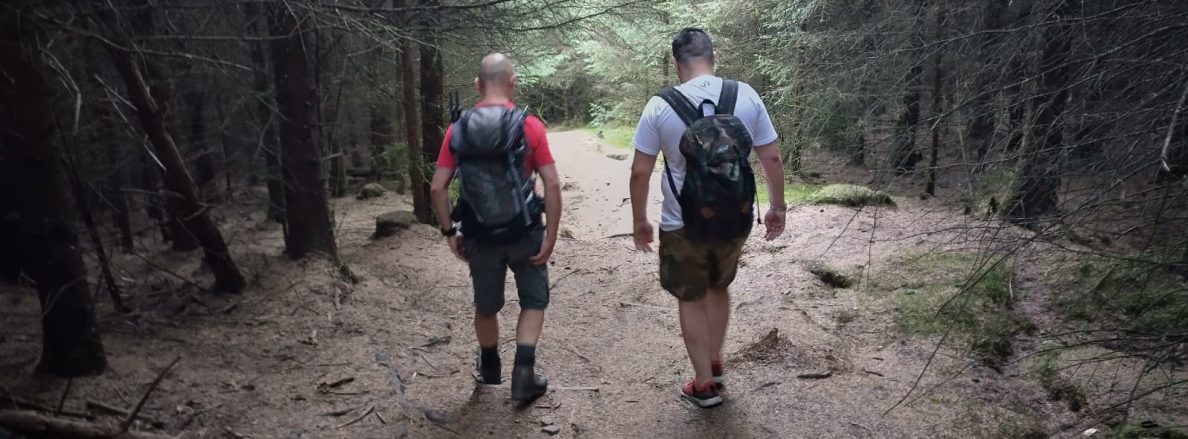

The UK is home to some of the most varied walking landscapes in Europe. From peaceful countryside paths to remote mountain ranges, every region offers its own character, pace, and sense of space.
Whether you’re walking local trails or heading into the mountains, it’s always the same feeling—freedom, movement, and time outdoors.
Simple paths. Wild places. Real walking.
The Peak District:
The Peak District is a landscape of open moorland, rolling hills, and quiet valleys. As the UK’s first national park, it has long been a favourite for walkers and outdoor explorers.
While it has no high mountains, it offers space, variety, and some of the most accessible walking in the country. From gentle valley paths to longer ridge walks, it’s a place where you can move freely and at your own pace.
Well-known areas like Kinder Scout and Mam Tor offer wide views and a strong sense of escape, while gritstone edges, caves, and plateaus give the region its character.
Simple, open, and full of variety—the Peak District is a place people always return to.

Quick Facts:
UK’s first national park (1951)
Highest point: Kinder Scout (636m)
Start of the Pennine Way
Famous for moorland, caves, and gritstone edges
Covers Derbyshire, Yorkshire, and Staffordshire
The Lake District:
The Lake District is one of England’s most iconic walking regions, known for its lakes, valleys, and rugged mountain scenery.
It offers everything from peaceful lakeside walks to challenging mountain routes. Classic hikes like Helvellyn and Striding Edge provide real adventure, while lower valley paths offer calm and space to explore.
It is home to England’s highest mountain, Scafell Pike, and its longest lake, Windermere. The landscape is shaped by water, weather, and time, creating constantly changing scenery.
Simple, dramatic, and timeless—the Lake District is one of the UK’s most complete walking regions.

Quick Facts:
Largest national park in England
Highest mountain: Scafell Pike (978m)
Longest lake: Windermere
Famous routes: Helvellyn, Striding Edge
Inspired poets like William Wordsworth
Wales:
Wales is a country of contrast, where mountains, valleys, forests, and coastline sit close together.
The north is rugged and mountainous, while the south offers softer hills, waterfalls, and open national park scenery. Together, they create one of the most diverse walking countries in the UK.
From high peaks to quiet forest trails, Wales offers both challenge and calm in equal measure.
Rich in history and shaped by ancient landscapes, it is a place full of natural character and space to explore.
Wild, varied, and full of adventure—Wales has something for everyone.

Quick Facts:
Home to Snowdon (1,085m), highest peak in Wales
Snowdonia (Eryri) National Park covers 800+ sq miles
Includes mountains, valleys, forests, and coastline
Brecon Beacons is now Bannau Brycheiniog National Park
Over 500,000 annual Snowdon summit attempts
North Wales:
North Wales is the mountain heart of Wales, dominated by the peaks and ridges of Eryri (Snowdonia National Park).
This is where you find Snowdon, along with dramatic mountains such as Tryfan, Glyder Fawr, and Cadair Idris. The landscape is shaped by glaciers, creating steep ridges, deep valleys, and dramatic terrain.
It is a place built for mountain walking, with both famous routes and quieter, remote trails.
Raw, powerful, and ever-changing—North Wales is made for adventure.
Quick Facts:
Snowdon (1,085m)
Peaks: Tryfan, Glyderau, Cadair Idris
Crib Goch and Snowdon Horseshoe routes
Deep glacial valleys and sharp ridges
Part of Eryri National Park
South Wales:
South Wales offers a gentler landscape of rolling hills, waterfalls, forests, and open national park scenery.
The Brecon Beacons (Bannau Brycheiniog National Park) are the highlight, with Pen y Fan and surrounding ridges offering wide views across the countryside.
It is a region of calm walking, hidden valleys, and peaceful trails.
Soft, open, and spacious—South Wales is ideal for relaxed exploration.
Quick Facts:
Pen y Fan (886m), highest peak in South Wales
Bannau Brycheiniog National Park (Brecon Beacons)
Famous waterfall regions
Rolling hills and forest trails
Accessible walks for all levels
Scotland:
Scotland is the most wild, remote, and dramatic walking landscape in the UK — a country defined by vast mountains, deep glens, endless moorland, and some of the emptiest spaces in Europe.
It feels larger than it is. Distances stretch, weather changes fast, and the sense of isolation is real — especially in the Highlands and islands.
Scotland is shaped by several major walking regions:
The Highlands (West & North)
The heart of wild Scotland. This is where the biggest drama lives — towering peaks, sea lochs, and deep-cut glens shaped by ice and time.
Areas like GlenCoe, Torridon, and Skye offer some of the most iconic mountain scenery in the UK. Ridges are sharp, valleys are steep, and the scale is huge.
Glencoe
Isle of Skye
The Grampians (Central Highlands)
A broad mountain region forming the backbone of Scotland. It includes long ridgelines, deep valleys, and many of the country’s highest peaks.
This area links much of the Highlands together and holds classic Munro walking terrain — long ascents, ridge walks, and big panoramic views.
The Southern Uplands:
A quieter, softer landscape in the south of Scotland, but still full of long-distance walking routes. Rolling hills, open moorland, and vast empty stretches define this region.
It’s less dramatic in height but powerful in atmosphere — peaceful, remote, and often overlooked.
The Islands & Coastal Wild Areas:
Beyond the mainland, Scotland’s islands add another layer entirely — Hebrides, Orkney, and Shetland bring coastal cliffs, wind-blasted hills, white beaches, and a feeling of total isolation.
These areas feel cut off from everything — shaped by sea, wind, and weather.
The Cairngorms (East Highlands)
A vast high plateau landscape The Cairngorms are unlike anywhere else in the UK. This is not sharp alpine peaks, but a huge open arctic-like wilderness of rolling mountains, snow basins, and long distances between shelters.
It’s one of the most remote-feeling parts of the country, especially in winter conditions.

Quick Facts:
Home to Ben Nevis (1,345m), the highest mountain in the UK
Over 280 Munros (mountains over 3,000 ft)
Largest national park in the UK: Cairngorms National Park
Famous walking areas: Glen Coe, Skye, Cairngorms, Torridon
Includes mainland mountains, islands, and vast coastal wilderness
One of Europe’s most accessible true wilderness regions
Together, these regions create one of the most complete wildernesses walking environments in Europe — mountains, plateaus, coast, and islands all within one country.
Scotland is not just scenery — it’s scale, weather, silence, and space.
Remote, powerful, and unforgettable — this is walking at its purest.
Final Thoughts:
The UK offers an incredible variety of walking landscapes, all within a relatively small space. From open moorlands and rolling hills to high mountain ranges and remote wilderness, every region has its own character and rhythm.
Some places are easy and peaceful, others are wild and demanding—but all of them offer the same reward: time outside, space to think, and a deeper connection with nature.
You don’t need to go far to find something special. Sometimes the best walks are the simple ones, just a path, the open air, and the freedom to keep moving.
As this guide grows, more walking regions across England and the wider UK will be added—bringing even more places to explore, discover, and enjoy on foot.
Simple paths. Real places. A lifetime of walking.
Martin ( Compass ) & Chris ( Clogs ) PositiveOutdoor365
Inspired by this adventure? Join one of our guided walks and explore the Peak District for yourself. Whether it’s a gentle stroll or a full-on hill challenge, we’ll help you enjoy the scenery safely, build your confidence on the trail, and make every step count. Get in touch to find out more!
We also support mental health charity Mind and trail conservation project Fix the Fells.


2026